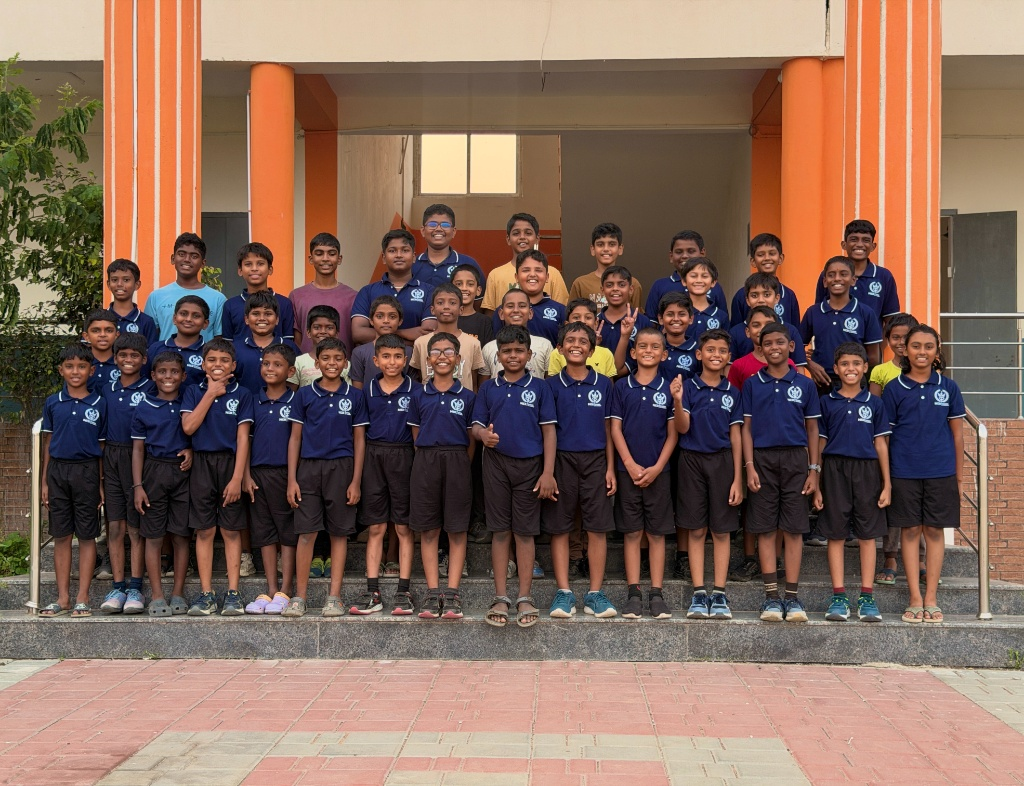
How NDI Sainik Academy Prepares Students for AISSEE, RMS and RIMC Examinations
Parents often ask us the same thing: "What exactly will my child do at your academy to get ready for the exam?" This article explains our preparation approach step by step, from the first week to exam day, for the Sainik School entrance exam (AISSEE), the Rashtriya Military School entrance (RMS CET) and the RIMC entrance exam.


On this page 1 sections
- 01We describe what we do, what we do not do and what parents should expect.
- The three exams we prepare students for
- Step 1: Understanding the child and the target
- Step 3: Subject-wise preparation
- Step 4: The daily learning cycle
- Step 5: Practice and question banks
- Step 6: Tests and mock exams
- Step 7: The error notebook
- Step 8: Doubt clarification and mentoring
- Step 9: Physical fitness and discipline
- Step 10: Exam strategy and final revision
- Online and residential: how preparation differs
- How parents stay informed
- AISSEE 2027 timeline
- Results
- Frequently asked questions
- Final words
- Follow NDI Sainik Academy
We describe what we do, what we do not do and what parents should expect.
NDI Sainik Academy is a private coaching academy in Tamil Nadu offering online and residential programmes.
Quick overview
Our preparation follows one simple cycle: learn, practise, test and revise. Students learn concepts in class, practise with daily questions, take regular tests and mock exams, and revise using an error notebook. The same cycle is adapted for three exams: Sainik School AISSEE, RMS CET and RIMC. We do not promise guaranteed selection, and no academy can.
The three exams we prepare students for
AISSEE (Sainik Schools and New Sainik Schools). The All India Sainik Schools Entrance Examination is for Class 6 and Class 9 admission. AISSEE 2027 is on 31 January 2027, as per the NTA public notice of 3 November 2026. It is a pen-and-paper, OMR-based, multiple-choice exam. Class 6 is 150 minutes in 13 mediums, and Class 9 is 180 minutes in English medium.
RMS CET (Rashtriya Military Schools). The Common Entrance Test for admission to Rashtriya Military Schools.
RIMC (Rashtriya Indian Military College). The entrance exam for admission to RIMC, which we prepare students for at the Class 8 entry level.
Each exam has its own rules, so we prepare students for the one they are targeting, rather than giving the same plan to everyone.
Step 1: Understanding the child and the target
Preparation begins by understanding where the child stands.
Current class and school syllabus level
Target exam and entry class
Strengths and weak subjects
Study habits, attention span and confidence
Whether online or residential suits the child
Parents can discuss this with the admissions team before joining.
Step 2: Building the foundation (Class 3 to Class 8)
NDI Sainik Academy offers foundation preparation for students from Class 3 to Class 8. The early stage focuses on:
Basic maths, tables and number sense
Reading, grammar and vocabulary
Simple reasoning puzzles
Curiosity about India, science and the world
Daily routine and study habits
We keep the early years light, because a child who enjoys learning performs better than a child who feels pressure.
Step 3: Subject-wise preparation
The Class 6 AISSEE paper covers four areas, and we plan each of them.
Mathematics. The largest section. Students learn numbers, fractions, decimals, HCF and LCM, percentage, ratio, measurement, geometry, area, perimeter, word problems and data handling, followed by daily practice and timed questions.
Language. Reading comprehension, grammar, vocabulary and sentence correction, with regular passages and writing practice.
Reasoning (intelligence). Series, patterns, analogies, coding and decoding, direction sense, family relations and figure-based questions, with short daily puzzles.
General knowledge. Everyday science, India, civics, geography, sports and current affairs, supported by a revision notebook.
Check the official bulletin for the exact syllabus and marks. For Class 9 students, we use Class 8 level content and a longer paper of 180 minutes.
Step 4: The daily learning cycle
Every day follows the same pattern.
Learn: the teacher explains a concept in class
Practise: students solve questions on the same topic
Test: a short daily test checks understanding
Revise: mistakes go into the error notebook and are fixed
In the residential programme, there are six academic sessions a day, about seven hours of coaching, and daily tests. In the online programme, live classes run in the evening from 6 to 8 PM, with recorded classes for revision.
Step 5: Practice and question banks
Students work through a large bank of practice questions. The residential programme reports 5,000+ practice questions. Practice is graded from easy to difficult, so students build confidence before facing tougher questions.
Step 6: Tests and mock exams
Tests are the heart of preparation.
Daily tests in the residential programme and weekly tests in the online programme
Weekly full-length mock exams in the residential programme
Mock exams on an OMR sheet, so students get used to the real format
Timed conditions that match the exam duration
After each test, students review every question: right, wrong and guessed.
Step 7: The error notebook
The error notebook turns mistakes into marks. For every wrong answer, the student writes:
The question and topic
The type of mistake: concept gap, careless error or time shortage
The correct method
A date to re-attempt the question
Students review the notebook weekly and again before the exam.
Step 8: Doubt clarification and mentoring
Students are encouraged to ask questions, and teachers help clear doubts. Students also learn from mentors, including retired defence officers presented on our website. Mentors help students understand discipline, leadership and the values behind the defence services.
Step 9: Physical fitness and discipline
Sainik Schools, RMS and RIMC value fitness. In the residential programme, the day starts at 5:30 AM with physical training at 6 AM, followed by assembly at 8:15 AM, and includes sports such as football, volleyball, cricket, silambam, karate and athletics. Lights-out is at 9:30 PM. Learn more on the residential coaching programme page.
Online students are encouraged to follow a regular routine at home, with daily exercise and fixed sleep timings.
Step 10: Exam strategy and final revision
In the last weeks before the exam, we focus on exam skills:
Time management for each section
Attempting easy questions first
Filling the OMR sheet accurately
Checking negative marking rules in the bulletin before guessing
Staying calm and confident
The final week is for light revision, checking the admit card and exam centre, and good sleep. Read our guide on how to crack the Sainik School entrance exam on the first attempt.
Online and residential: how preparation differs
Online coaching. Live classes in the evening, recorded classes, weekly tests and study material, delivered at home. See the online coaching programme. Parents support the routine at home.
Residential coaching. A full-day structured routine at the Maraimalai Nagar, Chengalpattu campus, with daily tests, weekly mock exams, sports, three meals, CCTV monitoring and on-site medical care.
The syllabus and approach are the same. The difference is the level of structure and supervision.
How parents stay informed
Parents can ask how progress is shared, how often tests are reviewed and how they can support the child at home.
What we do not do
We do not promise guaranteed selection
We do not share "leaked" papers or shortcuts
We do not fill your child's application or counselling form. Parents apply directly on the official portal
We do not claim to be a Sainik School or part of the Sainik Schools Society
AISSEE 2027 timeline
Application window: 3 November to 2 December 2026
Late submission with a Rs. 500 late fee: 3 to 6 December 2026
Correction window: 7 to 9 December 2026
Exam city announcement: 11 January 2027
Admit card: 25 January 2027
Exam date: 31 January 2027
Confirm all dates on exams.nta.nic.in/sainik-school-society and nta.ac.in.
Results
You can see published results, with the exam, year, class and marks, on our student results page. Past results do not guarantee future selection.
Frequently asked questions
How does NDI Sainik Academy prepare students for AISSEE? Through a cycle of learning, practice, tests and revision, with subject-wise planning, mock exams and an error notebook.
Does NDI prepare students for RMS and RIMC as well? Yes. It offers RMS CET and RIMC entrance coaching.
Are there mock tests? Yes. The residential programme has weekly full-length mock exams, and the online programme has weekly tests.
Which classes does the foundation programme cover? Class 3 to Class 8.
Can NDI guarantee selection? No. No academy can guarantee selection.
Is NDI Sainik Academy a Sainik School? No. It is a private coaching academy and is not part of NTA or the Sainik Schools Society.
Final words
Good preparation is not about shortcuts. It is about a clear plan, regular practice, honest feedback and a child who feels supported. Visit our programmes, ask questions and choose the format that fits your child.
If you have any doubts about age eligibility, the exam or how to apply, feel free to reach out to NDI Sainik Academy on +91 93848 19951 or +91 93848 19952. Our team will guide you through the process. You can also read more on our blog, visit our FAQ page, or explore NDI Sainik Academy.
Follow NDI Sainik Academy
Instagram: instagram.com/ndi_sainik_academy
YouTube: youtube.com/@ndi_sainik_academy
NDI Sainik Academy is a private coaching academy and is not a Sainik School or part of NTA or the Sainik Schools Society. Dates and rules are based on the NTA public notice of 3 November 2026 and may change. Past results do not guarantee future selection.
Originally published at ndisainik.com